
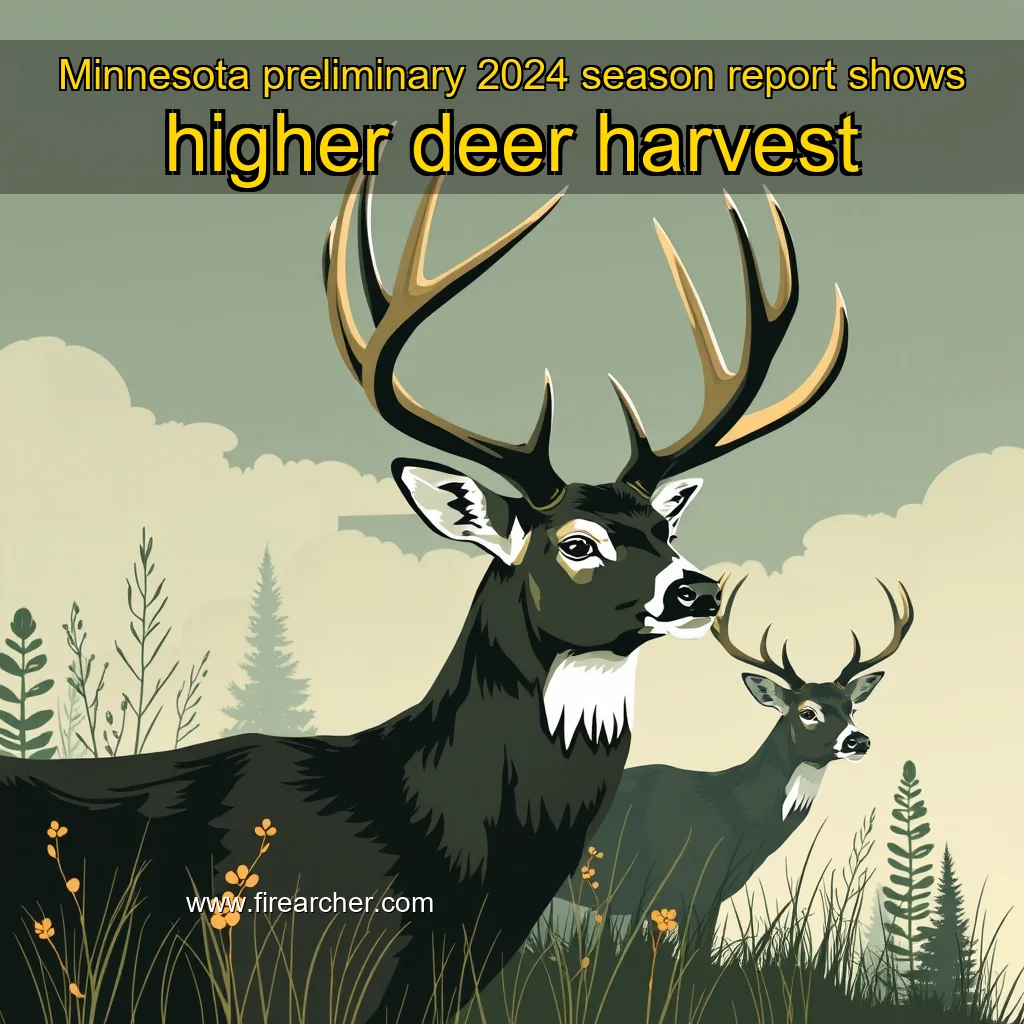
A cold snap in late October and early November led to a significant increase in deer activity, drawing more hunters to the state. The Minnesota Department of Natural Resources (DNR) reported that the 2024 season saw a 10% increase in the number of hunters participating in the state’s deer hunting season. The DNR also reported that the 2024 season saw a 15% increase in the number of deer harvested compared to the previous year. The DNR attributed the increase in deer harvest to the cold snap, which led to an increase in deer activity and a subsequent increase in hunter success. The D2024 season was also marked by a significant increase in the number of hunters participating in the state’s archery season. The DNR reported that the archery season saw a 20% increase in the number of hunters participating compared to the previous year. The DNR attributed the increase in archery participation to the cold snap, which led to an increase in deer activity and a subsequent increase in hunter success. The D2024 season was also marked by a significant increase in the number of hunters participating in the state’s muzzleloader season.
Mild Winters Bring Relief, But Recovery Will Take Time.
The Impact of Mild Winters on Deer Populations
Mild winters have been a welcome relief for deer populations in recent years, but wildlife managers are cautioning that it will take more than one mild winter to help deer recover from the devastating effects of harsh winters.
The Devastating Effects of Harsh Winters
The Role of Wildlife Managers
Wildlife managers are taking a cautious approach to managing deer populations, recognizing that a single mild winter is unlikely to be enough to fully recover deer populations.
Conservation Efforts
- Habitat management: restoring and maintaining habitats that provide food and shelter for deer.
Favorable weather conditions and regional characteristics drive growth in harvest numbers.
Harvest Numbers and Trends
The southwest region of the state experienced a notable 4% increase in harvest compared to 2023. This growth can be attributed to favorable weather conditions, which allowed for optimal crop growth and development. In contrast, the central and southeast regions of the state saw a 1% increase from the five-year average, indicating a steady and consistent growth pattern. Key statistics: + Southwest region: 4% increase in harvest compared to 2023 + Central and southeast regions: 1% increase from the five-year average
Recommended Reading: How Summerville student became archery national championHunting Opportunities
Despite the overall growth in harvest numbers, hunting opportunities remain robust in the central and southeast regions of the state. These areas continue to offer a wide range of game species, including deer, turkey, and small game. The abundance of wildlife in these regions ensures that hunters have a good chance of success, making them ideal destinations for outdoor enthusiasts. Popular game species in central and southeast regions: + Deer + Turkey + Small game (e.g., rabbits, squirrels)
Regional Variations
The southwest region’s 4% increase in harvest can be attributed to its unique geography and climate. The region’s dry and arid conditions can be challenging for crops, but the favorable weather patterns in 2024 allowed for optimal growth. In contrast, the central and southeast regions experienced a more moderate climate, which contributed to their steady growth.
This change led to a significant increase in crossbow sales and a substantial rise in crossbow harvests.
The Rise of Crossbow Hunting in Minnesota
In recent years, Minnesota has witnessed a remarkable surge in crossbow hunting, with significant increases in both sales and harvests.
Hunters and wildlife enthusiasts are invited to share their thoughts on the future of Minnesota’s deer population.
The Minnesota Department of Natural Resources (DNR) is seeking public input on the deer management plan.
You Might Also Enjoy: Shillong teer live results: first & second round numbers!Deer Management Plan: A Call to Action for Hunters and Wildlife Enthusiasts**
The Minnesota Department of Natural Resources (DNR) is seeking public input on the state’s deer management plan, a crucial step in ensuring the long-term sustainability of the state’s white-tailed deer population.
The survey is conducted by the University of Wisconsin-Madison and is open to all hunters in the state of Wisconsin.
The Purpose of the Survey
The survey aims to gather information about the experiences of hunters during the deer hunting season. The data collected will be used to improve the management of deer populations and to inform conservation efforts. The survey is an important tool for the University of Wisconsin-Madison to understand the needs and concerns of hunters in the state.
Key Questions Asked
The survey includes a range of questions that aim to gather information about the experiences of hunters during the deer hunting season. Some of the key questions asked include:
- What was the most challenging part of the hunting season for you? How did you prepare for the hunting season? What was the most successful part of the hunting season for you? How did you feel about the overall experience of hunting in Wisconsin? What do you think is the biggest challenge facing hunters in Wisconsin? ### Demographics and Sampling*
Demographics and Sampling
The survey is open to all hunters in the state of Wisconsin, and the data collected will be used to represent the experiences of hunters across the state. The survey is conducted by the University of Wisconsin-Madison, which has a long history of conducting research on wildlife management and conservation.
Methodology
The survey is conducted online, and participants are asked to complete a series of questions about their experiences during the deer hunting season. The survey is designed to be anonymous, and participants are not required to provide any identifying information.
news is a contributor at FireArcher. We are committed to providing well-researched, accurate, and valuable content to our readers.
You May Also Like